Choosing the right tile is one of the most important decisions in any bathroom renovation — and in South Florida, the stakes are higher. Constant humidity, salt air near the coast, hard water, and the ever-present risk of mold mean a tile that looks great in a showroom can underperform in a Palm Beach or Broward County bathroom. The best tile for South Florida bathrooms balances three things: moisture resistance, slip safety, and long-term durability in a demanding coastal climate. This guide compares your main options and explains how to pair them for a bathroom that looks beautiful and holds up for years.
Planning a tiled bathroom or shower? Get a free, no-obligation estimate from our licensed local team.
Bathroom Remodeling in Boca Raton →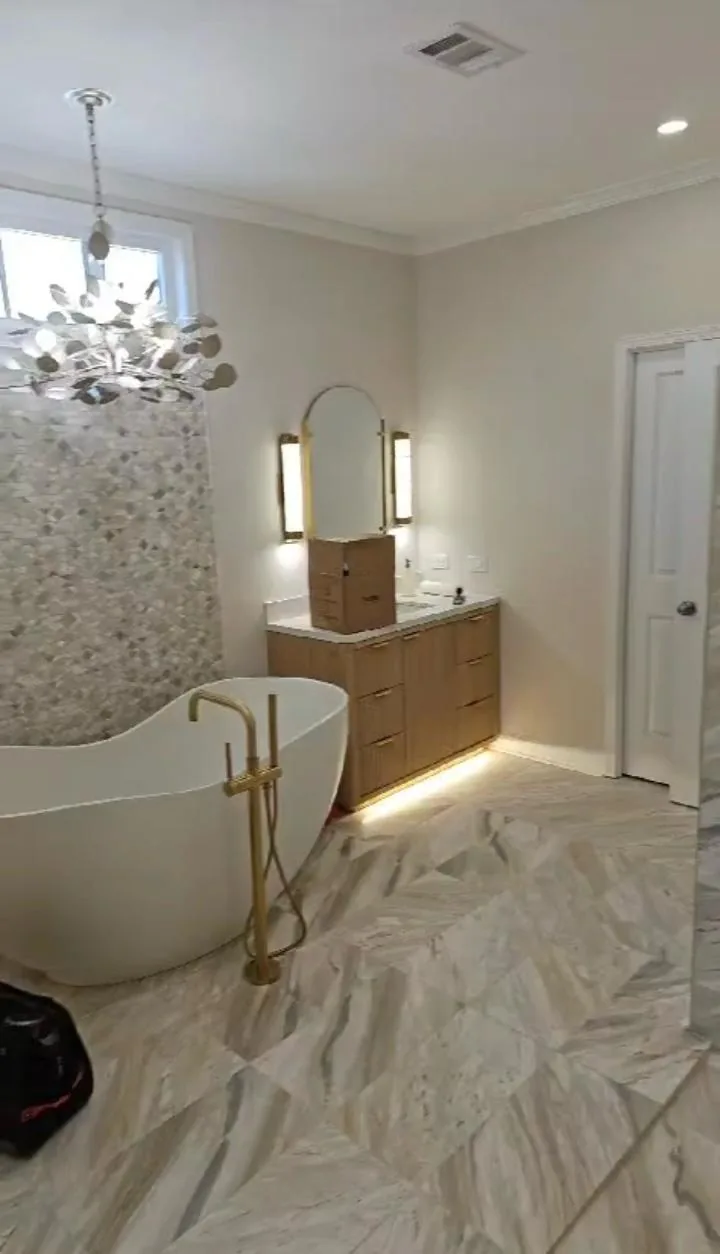
Porcelain: The South Florida Workhorse
Porcelain is the tile most widely recommended for South Florida bathrooms, and for good reason. It is fired at higher temperatures than standard ceramic, which makes it denser and far less porous — so it absorbs very little water, a critical property in a humid, coastal environment. Porcelain performs well on both floors and walls, resists staining, and is available in finishes that convincingly mimic marble, travertine, concrete, and wood without the maintenance those materials demand. For most homeowners renovating a bathroom in Boca Raton and the surrounding area, porcelain is the safe, durable default.
Ceramic: Budget-Friendly for the Right Spots
Standard ceramic tile is more affordable than porcelain and still works well in lighter-use areas and on walls. Because it is more porous than porcelain, it is generally less ideal for shower floors and high-moisture zones, but a quality glazed ceramic on a vanity wall or as a decorative accent can stretch a budget without compromising the look. Many South Florida bathrooms use porcelain where moisture is heaviest and ceramic where it is not.
Natural Stone: Beautiful, but High-Maintenance
Marble, travertine, and other natural stones bring undeniable elegance and remain popular in higher-end homes. The trade-off is maintenance: natural stone is porous, requires periodic sealing, and is more vulnerable to staining and etching in a humid bathroom. Near the coast, where salt and moisture are relentless, many homeowners opt for porcelain that replicates the look of marble — getting the high-end appearance with far less upkeep, especially inside the shower. If you love real stone, reserve it for lower-moisture areas and commit to a sealing schedule.
Slip Resistance: Don't Overlook the Floor
In wet areas, safety matters as much as looks. Highly polished, large-format tiles are stunning on walls but can be slippery underfoot when wet. For shower floors and bathroom floors, choose tiles with more texture and a matte finish, or smaller mosaic tiles whose extra grout lines add grip and help water slope toward the drain. A common, effective approach is large-format porcelain on the walls and a textured or small-format tile on the floor.
Grout and Waterproofing: The Hidden Heroes
The tile surface is only part of the story. In South Florida's humidity, grout and waterproofing determine whether a bathroom resists mold over time:
- Grout: High-performance or epoxy-based grout resists moisture, staining, and mildew better than standard cementitious grout, which is why many local installers favor it in showers.
- Fewer grout lines: Larger wall tiles mean less grout to clean and fewer places for mildew to take hold.
- Waterproofing membrane: Behind the tile, a sheet or liquid membrane system protects the wall structure from water intrusion — essential in wet areas and older homes.
Even the best tile will disappoint if the grout and waterproofing behind it are an afterthought.
How to Pair Tile for a South Florida Bathroom
A reliable formula many homeowners and contractors in the region use:
- Walls: Large-format porcelain for a clean, low-maintenance, modern look.
- Shower floor: Textured porcelain or small mosaics for slip resistance and proper drainage.
- Main bathroom floor: Matte or textured porcelain in a coordinating tone.
- Accents: A ceramic or stone-look feature strip or niche, used sparingly, adds character without raising maintenance across the whole room.
For most South Florida bathrooms, dense porcelain on the walls, a textured slip-resistant tile on wet floors, and quality grout with proper waterproofing is the combination that delivers both style and longevity.
Related Guides
- Bathroom Remodeling in Boca Raton — our full service page
- Bathroom Remodeling Cost in Boca Raton: 2026 Price Guide
- Walk-In Shower Cost in Boca Raton
- Tile Installation in Delray Beach
Frequently Asked Questions
What is the best tile for a South Florida bathroom?
Porcelain tile is the most widely recommended choice for South Florida bathrooms because it is dense, low in porosity, and highly resistant to moisture absorption — important in a humid, coastal climate. It performs well on both floors and walls and requires less maintenance than natural stone.
Is porcelain or ceramic tile better for humid bathrooms?
Porcelain is generally better than standard ceramic for humid South Florida bathrooms because it is fired at higher temperatures, making it denser and less porous, so it absorbs less water. Ceramic can still work well for walls and lighter-use areas and is often more budget-friendly, but porcelain is the more durable, moisture-resistant option for floors and showers.
Is natural stone tile a good idea in South Florida bathrooms?
Natural stone such as marble or travertine is beautiful and popular in higher-end homes, but it is porous and requires periodic sealing and more careful maintenance in the humid coastal climate. Many homeowners choose porcelain that mimics the look of marble to get the appearance with less upkeep, particularly in shower areas exposed to constant moisture.
What tile is safest for a bathroom or shower floor?
For wet areas, choose tile with good slip resistance. Smaller mosaic tiles or textured and matte-finish porcelain provide more grip and more grout lines for traction, which is why they are common on shower floors. Highly polished, large-format tiles look striking on walls but can be slippery when wet underfoot.
Are large-format tiles good for South Florida bathrooms?
Yes. Large-format porcelain tiles are popular on bathroom and shower walls because they create a clean, modern look with fewer grout lines to clean and maintain in a humid environment. On wet floors, a more textured or smaller-format tile is usually preferred for slip resistance.
Does grout matter for South Florida bathrooms?
Grout matters a great deal in humid climates. Many local installers use or recommend high-performance or epoxy-based grout in showers because it resists moisture, staining, and mold better than standard cementitious grout. Fewer grout lines, achieved with larger tiles on walls, also means less surface for mildew to develop.
What tile finish resists mold and mildew best?
The tile surface itself — glazed porcelain or ceramic — resists mold well because it is non-absorbent. The vulnerable areas are the grout and any porous natural stone. Using dense porcelain, quality grout, and proper waterproofing behind the tile is the most effective combination against mold in South Florida bathrooms.
Should bathroom wall tile and floor tile be different?
Often, yes. A common approach in South Florida bathrooms is large-format porcelain on the walls for a sleek look, paired with a more textured or smaller tile on the floor for slip resistance. Coordinating the colors and finishes while varying the format gives both safety and style.
About this guide: Material recommendations reflect general installation practices for humid coastal climates and the experience of contractors working across South Florida. Specific product performance varies by manufacturer, grade, and installation; confirm suitability for your project with your contractor and material supplier.
Last updated: June 2026
Ready to Tile Your Bathroom?
Get a free, no-obligation estimate from Primer Star Corp.