Why Tile Installation in Miami Requires Specialized Expertise
Tile is the dominant flooring material in Miami for good reason — in a city where humidity regularly exceeds 80% and tropical storms bring sudden flooding, porous materials like hardwood simply do not survive. Miami's 464,655 residents overwhelmingly choose porcelain and ceramic tile for their homes, valued between $565,000 and $674,000, because it handles moisture, heat, and the sand tracked in from nearby beaches.
But tile installation in Miami is not the same as tile installation in Denver or Chicago. The concrete slab foundations common in South Florida — poured directly on Miami's porous limestone substrate — shift and settle differently than northern foundations. This movement cracks rigid tile installations that lack proper uncoupling membranes. Homes built around the 1978 median year often have uneven slabs that require extensive leveling before tile can be laid.
Miami-Dade's HVHZ code affects even tile work — products used in wet areas must meet specific standards, and any plumbing modifications during a tile project require permits filed through miami.gov/Permits-Construction or Miami-Dade County. The complex city vs. county permitting adds another layer that inexperienced contractors often mishandle. Our trilingual team (English, Portuguese, Spanish) navigates these requirements daily.
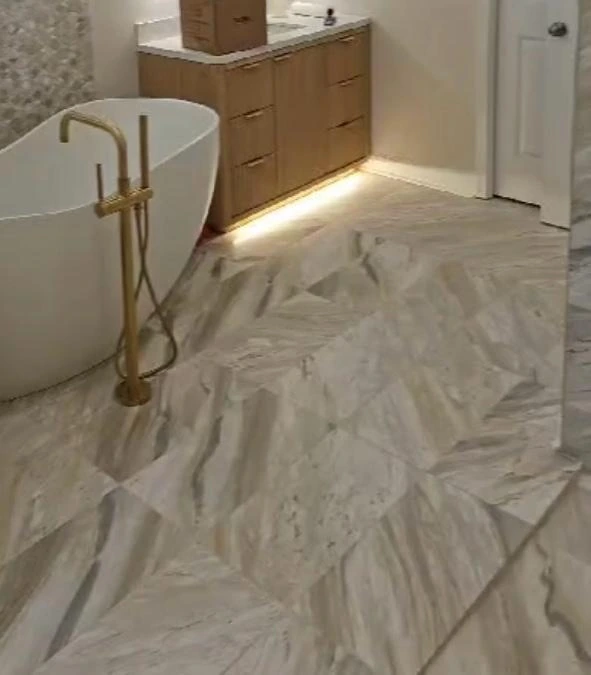
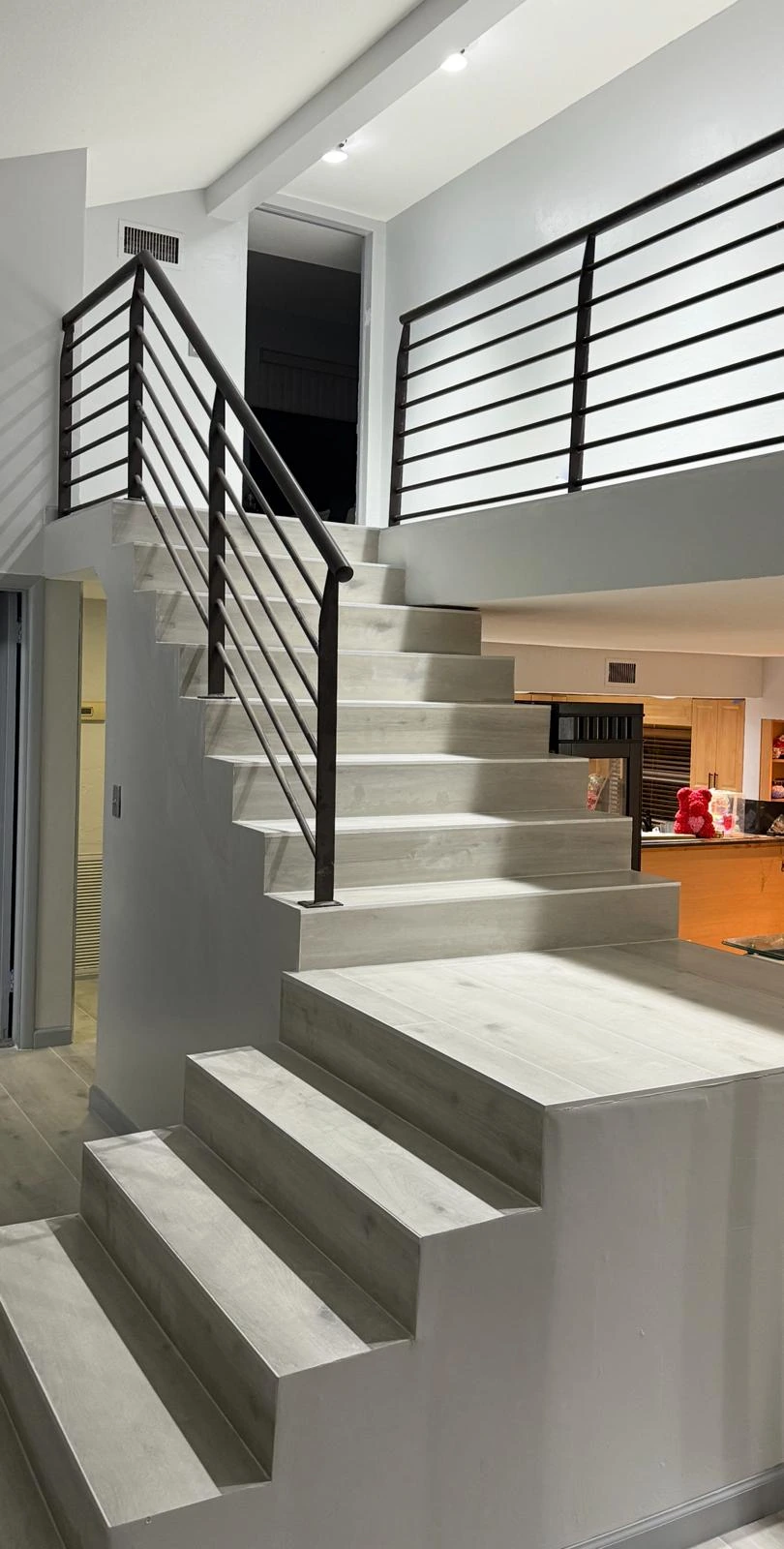
Tile Installation Projects
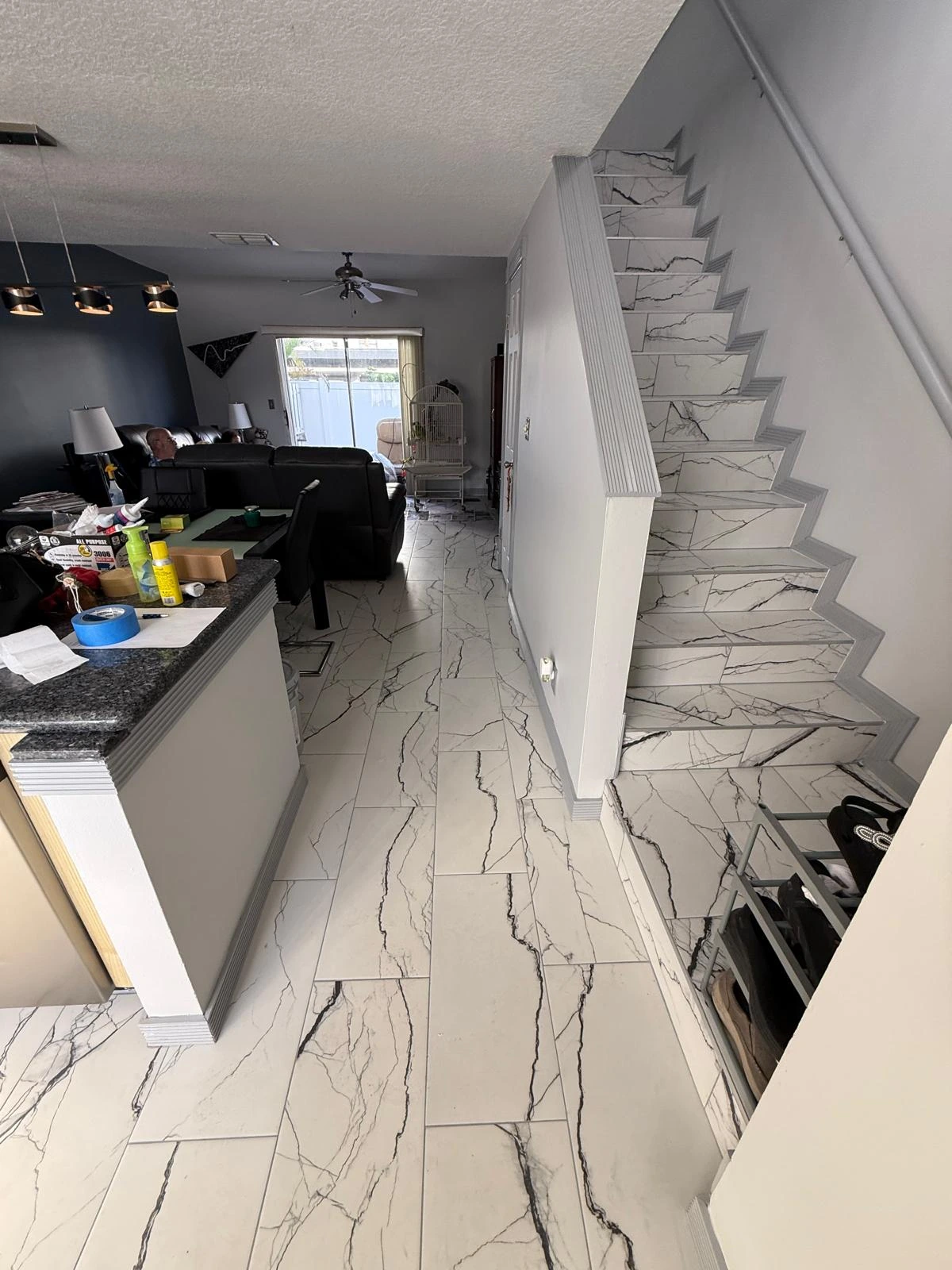
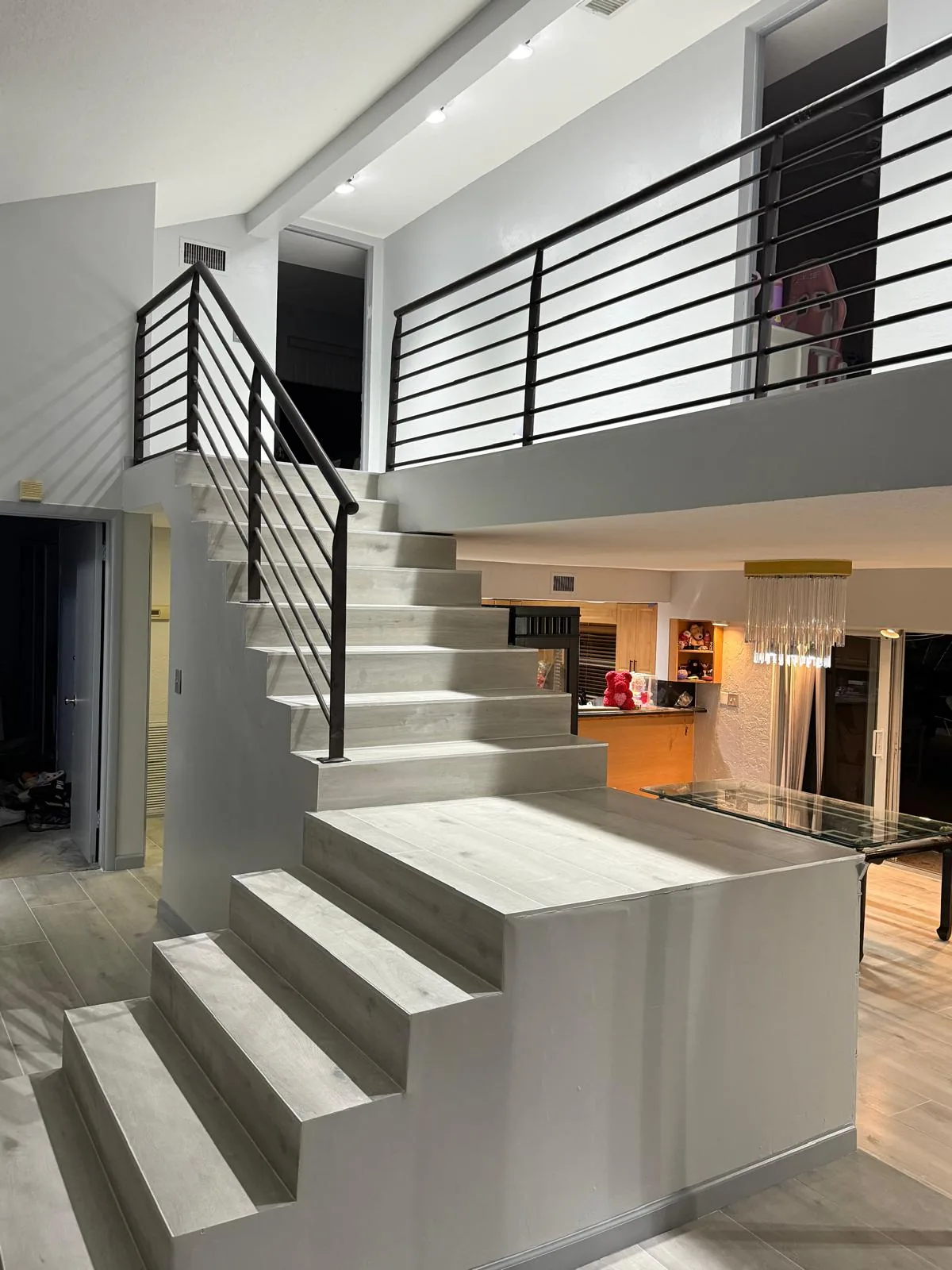
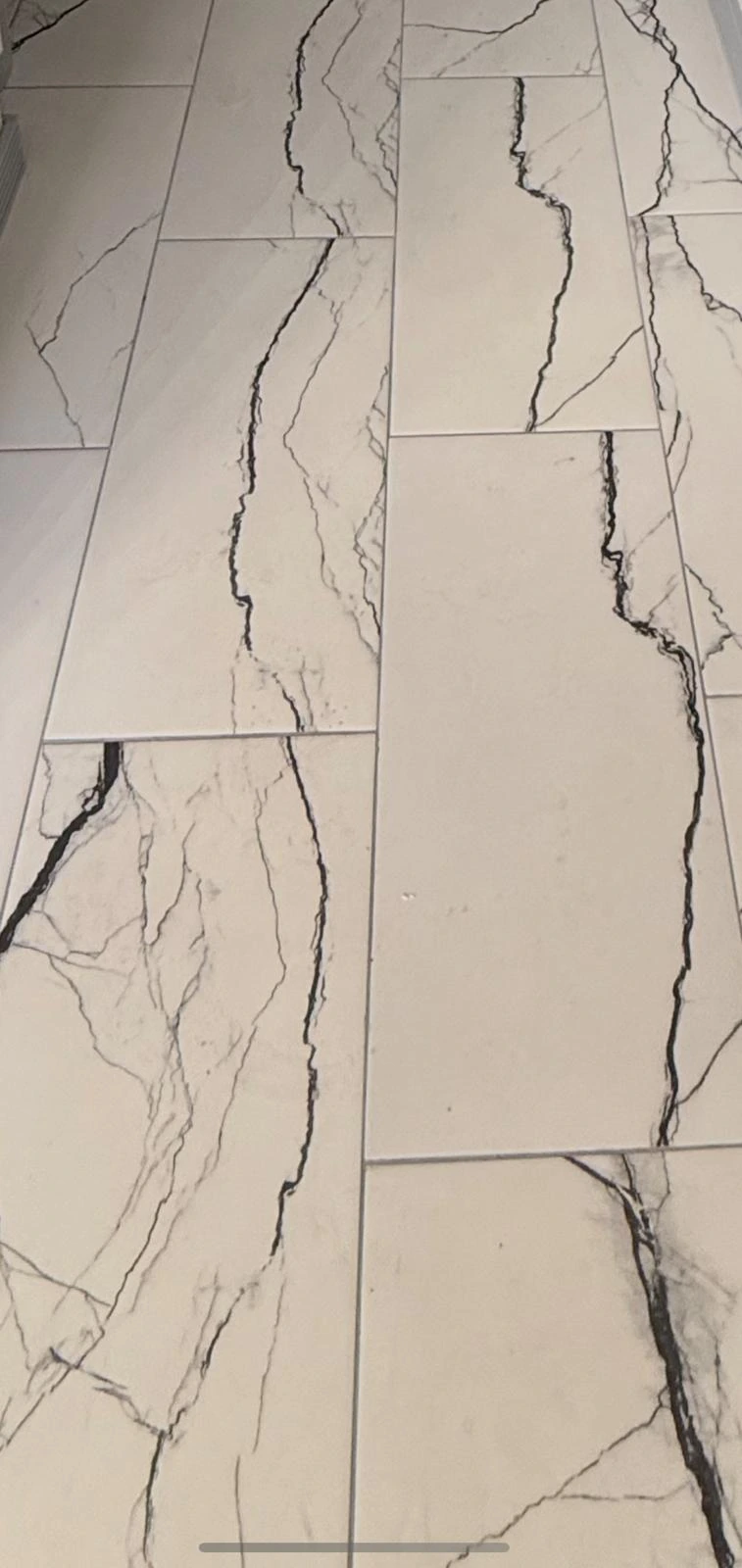
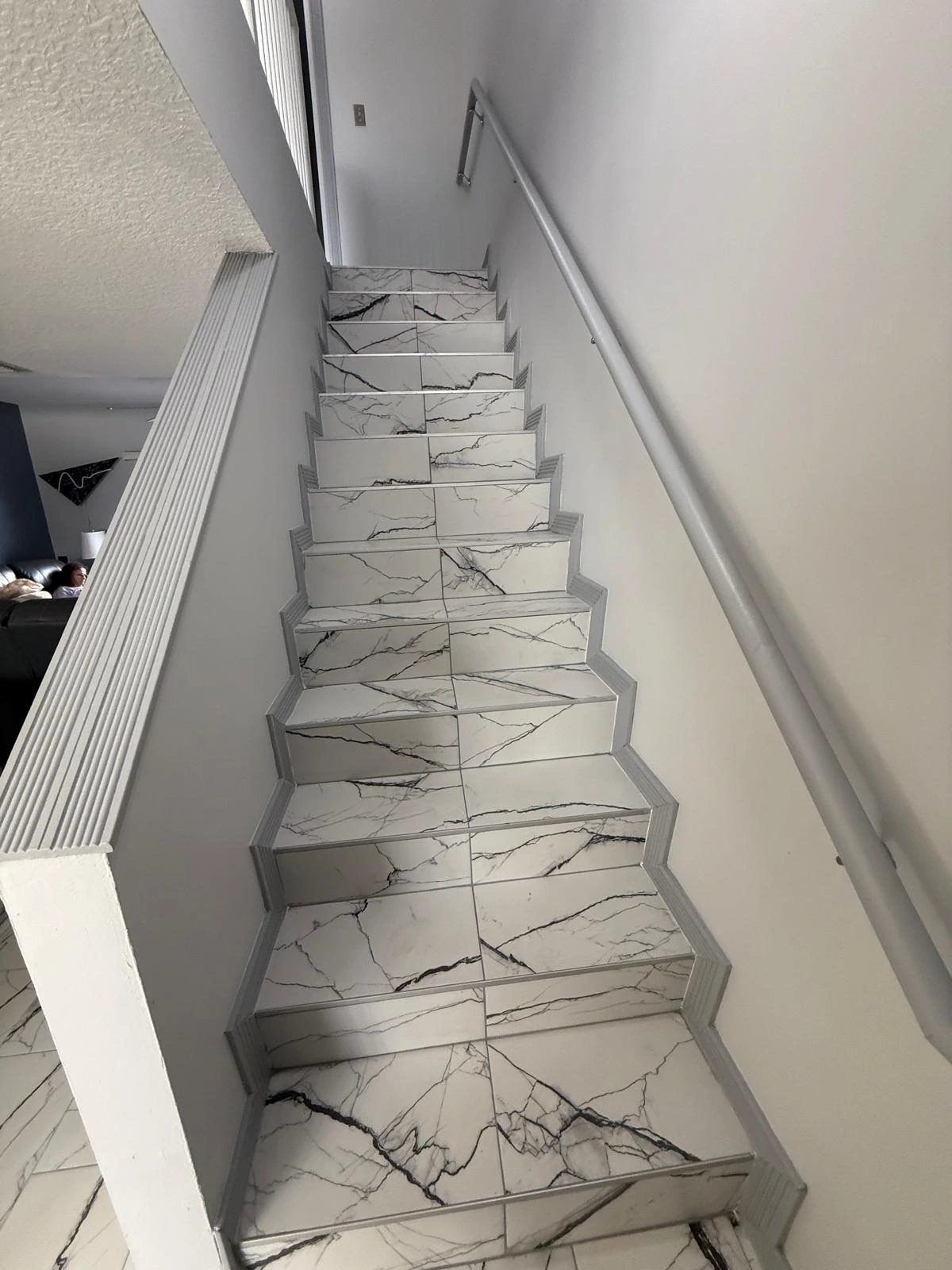
Real projects completed by our team in Miami and across South Florida.
Why Miami Homeowners Choose Us for Tile
Large-Format Tile Specialists
24x48, 32x32, and slab-size porcelain tiles require perfectly flat substrates and specialized installation techniques. We use self-leveling compound over Miami's uneven concrete slabs and back-butter every large tile for 100% mortar coverage.
Waterproof Shower Systems
Every shower gets full Schluter DITRA or RedGard waterproofing — non-negotiable in Miami's humidity. We install pre-sloped shower pans, linear drains, and curb-free entries. No shortcuts that lead to mold behind your tile in 12 months.
Subfloor Preparation Experts
Miami's 1978-era concrete slabs are rarely flat. We use self-leveling compound, crack isolation membranes, and Schluter DITRA uncoupling to prevent tile cracks from slab movement — the most common tile failure in South Florida homes.
Ready for New Tile in Your Miami Home?
Free estimate — we assess your subfloor, recommend materials, and provide a detailed installation plan.
Tile Installation in Miami — What You Need to Know
Neighborhoods we serve: Tile preferences vary across Miami's neighborhoods. Coral Gables homeowners favor travertine and Saltillo tile that matches their Spanish Revival architecture — these natural stones require professional sealing in Miami's humidity. Brickell condo owners prefer sleek large-format porcelain in neutral tones with minimal grout lines. Coconut Grove embraces eclectic patterns — encaustic cement tiles, hand-painted designs, and mixed-material installations. Pinecrest estates demand flawless wall-to-wall porcelain that flows from indoor living spaces to covered patios. South Beach Art Deco interiors often feature black-and-white geometric tile patterns that require meticulous layout planning.
Permits: Tile installation alone typically does not require a permit. However, if the project includes plumbing modifications (shower pan replacement, drain relocation), electrical work (heated floors), or structural changes, permits are required through miami.gov/Permits-Construction or Miami-Dade County. Fees are 0.5% of project cost (min $45).
Material selection for Miami: Porcelain tile (water absorption under 0.5%) is the best choice for Miami's humidity. Ceramic tile works for walls and light-traffic areas. Natural stone (travertine, marble) is beautiful but porous — it requires professional sealing every 1-2 years in Miami's climate. For outdoor areas, always choose slip-rated porcelain (R11+) to handle rain and pool splash.
Grout matters: Epoxy grout is the superior choice for Miami installations — it is waterproof, stain-proof, and mold-resistant. Cement grout absorbs moisture in Miami's humidity and becomes a breeding ground for mold within months if not sealed regularly. We use epoxy grout in all wet areas and recommend it for floors throughout the home.
Tile Installation Questions in Miami
Typically $8 to $25 per square foot installed, depending on tile type and pattern complexity. A bathroom floor (50 sq ft) runs $800-$1,500. Whole-home flooring (1,500 sq ft) with large-format porcelain ranges $12,000-$25,000 including subfloor prep. We provide free on-site estimates.
Porcelain is the gold standard — non-porous, humidity-resistant, and impervious to mold. For outdoor areas, slip-rated porcelain (R11+) handles rain safely. Natural stone like travertine is popular in Coral Gables but needs sealing every 1-2 years. We help you choose the right material for your space.
Yes — waterproofing is essential in Miami's 80%+ humidity. We install Schluter DITRA or RedGard membrane under all shower tile and recommend it for bathroom floors. Without proper waterproofing, moisture causes mold growth behind tile within 12-18 months in Miami's climate.
Absolutely — large-format porcelain (24x48, 32x32, and larger) is our specialty. We use self-leveling compound over Miami's uneven concrete slabs, medium-bed mortar, and back-buttering technique for 100% coverage. Fewer grout lines mean a cleaner look and easier maintenance.
A bathroom takes 3-5 days. A kitchen backsplash takes 1-2 days. Whole-home flooring (1,500 sq ft) takes 7-12 days including subfloor preparation, tile setting, and grouting. Miami's humidity requires longer cure times for thinset and grout — we factor this into every schedule.